

Here is the short answer, since I know why you are on this page. For a stiff older dog, Nordic Naturals Omega-3 fish oil soft gels are the easier of the two to live with. You count them out of a bottle, there is nothing to wipe up, and the kitchen cabinet does not end up smelling like a fish counter. A pump bottle of salmon oil is easier to adjust to a large dog's weight, and far easier to hide in food. That is the comparison in two sentences. What follows is how I got there, and the places where each one honestly loses.
My dog is Murphy, a ten year old golden retriever mix, seventy one pounds. His vet diagnosed arthritis in both hips in January 2026, after he started hesitating at the two concrete steps at my back door. I am not a veterinarian. I taught high school PE and health for thirty one years, and I read a label the way I used to read a lesson plan, looking mostly for what is missing. Dr. Sandoval clears every supplement before it goes into his bowl, and she has told me plainly that nothing in a bottle treats, cures or reverses arthritis. What a fish oil can do is supply fat a dog is not making enough of on his own. That is a smaller claim than most labels make, and it is the only one I will defend.
Nordic Naturals has been in his breakfast since March 2026. Before that, in February, I tried a pump bottle of salmon oil and gave up on it inside three weeks. Both are judged below on the things that actually decided it for me.
| Nordic Naturals Omega-3 | Pump salmon oil | |
|---|---|---|
| What you do at breakfast | Count soft gels out of the bottle, tuck them into kibble | Pump oil over the bowl, stir it through |
| Adjusting the amount | Fixed soft gel size; you take the label count at your dog's weight or you do not | The pump lets you move up or down by degrees, which helps a dog between sizes |
| Mess on the counter | Sealed gel, nothing drips, nothing to wipe | Oil on the rim, a ring on the counter, wiping before and after every meal |
| Smell in the kitchen | Bottle stays closed, the cabinet stays neutral | Open oil, noticeable fast in a warm kitchen |
| Dogs that sort out pills | A soft gel has to be hidden in food, and a determined dog can find it | Coats the kibble, so there is nothing to separate out |
| What the label tells you | Triglyceride molecular form, EPA and DHA named, non-GMO, no artificial colors, flavors or preservatives | Varies by bottle; often fish oil plus a preservative and little else said |
| Life once opened | Gels stay sealed, steady at room temperature | Liquid oil turns faster; some labels want it kept cold |
| Shelf footprint | 2.88 by 2.88 by 5.25 inches, about 7.2 ounces, sits on a cabinet shelf | Tall pump bottle that has to stand upright or leak |
| Number of lines to research | More to read, including the soft gel itself | Usually one or two lines, quick to check |
| Best for | A dog that takes a capsule in food and an owner who wants a fixed, counted amount | A dog that spits pills out, or an owner still working out the right amount |
Where Nordic Naturals Omega-3 Wins
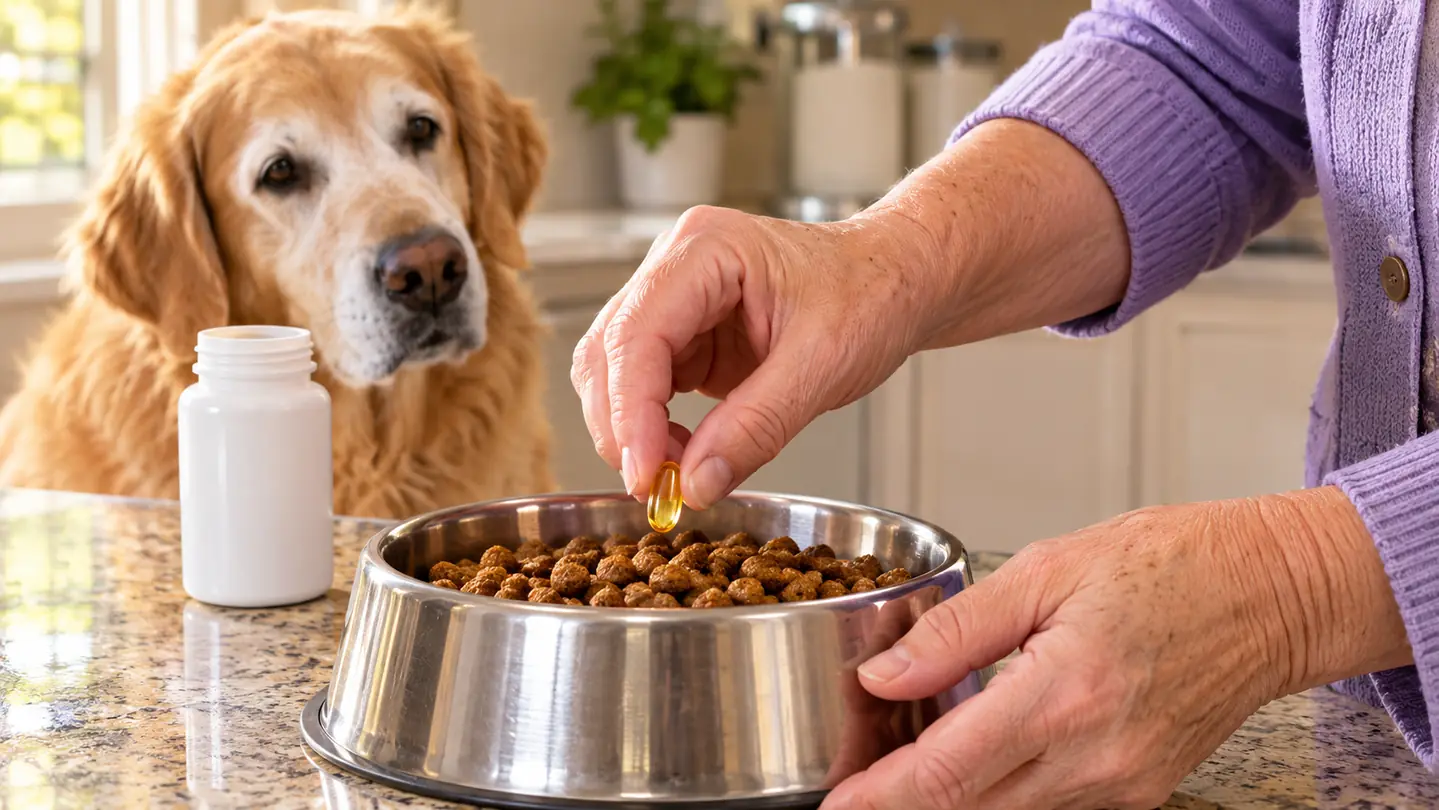
The first win is housekeeping, and I am not joking about it. The salmon oil left a ring of oil on the counter by the second week. I was wiping the rim before and after every meal, and the kitchen smelled of fish until I moved the bottle out to the garage. The soft gels are sealed. I tip what the label calls for at his weight into my hand, tuck them into his kibble, and put the bottle back in the cabinet next to the coffee maker. Nothing drips. Nothing to refrigerate. Nothing extra to remember at seven in the morning.
The second win is the label. Nordic Naturals states the oil is in the triglyceride molecular form, which is the form the fat occurs in naturally, and it names the EPA and DHA in the product title instead of burying them in a table. The bottle holds 120 soft gels, unflavored, about 7.2 ounces, 2.88 inches square by 5.25 inches tall. The listing says non-GMO, gluten free and dairy free, with no artificial colors, flavors or preservatives. Those are the four lines I check first on any supplement, and here they are all answered in one place instead of across three screens of marketing.
The third win is travel. On vet days the bottle goes into the console of the RAV4 and comes out at the clinic. A pump bottle in a car is a spill waiting to happen. I know which of the two I would pack.
The fourth is simply that the amount is fixed. I am not good at eyeballing a pump stroke. With the soft gels there is nothing to eyeball, and no argument with myself about whether that looked like more than yesterday.
Where Salmon Oil Wins
I want to be fair, because salmon oil does two things better and one of them matters a great deal in some houses. The first is adjustment. A pump lets you move the amount up or down by degrees. If your dog is between sizes on a label, or your vet wants to start small and build, the pump gives you somewhere to go. Soft gels come in one size. You take the count or you do not.
The second is palatability, and this is the one that settles it for people. Murphy will not take a soft gel on its own. He takes it because I push it into his food, and because he is a retriever who does not chew carefully. A dog who picks capsules out and leaves them on the kitchen floor will not be fooled by tucking them in forever. Oil coats the kibble and cannot be sorted out. A neighbor's terrier who spits out every pill takes salmon oil without an argument. If that is your dog, the messy counter is the smaller problem.
The third point is smaller but real. A plain salmon oil is a shorter read. Fish oil, and possibly a preservative to stop it turning. Fewer lines to check. That counts for something in a week when you are already reading the labels on a joint chew and a mussel chew as well.
The counted dose, in a bottle that fits on a cabinet shelf
Unflavored soft gels, 120 to the bottle, in the triglyceride molecular form with EPA and DHA named on the label. This is the one that has been going into Murphy's breakfast since March. It carries 4.6 stars across roughly 4,900 reviews.
Amazon Check Today's Price on Amazon →What Eight Months Actually Looked Like
I have to be honest here, because this is where most write ups about fish oil for dogs get slippery. By May his coat looked softer. That is the whole of it. I could not point to a change in how he got up off the bedroom carpet, and I was watching for one every single morning. The joint chew started in January, the traction boots came in February, and the soft gels arrived in March, so three things overlap and I cannot prove which one did what. Anyone who tells you otherwise is guessing.
What I can tell you is why I kept buying them. Dr. Sandoval's position is that omega-3 fat is a reasonable thing to have in an older dog's diet and that the risk is low when the amount follows the label. She promised nothing. I kept the bottle because continuing is one more line in the breakfast routine, and stopping would have left me wondering all winter.
The other thing I noticed is that he does not fight it. An unflavored soft gel pushed into wet kibble disappears. That sounds trivial until you have stood in a kitchen at seven in the morning negotiating with a seventy pound dog who has decided he is done with a chew.
What Else Was In His Bowl, and Why It Matters Here
Murphy gets three things, and I added them one at a time so I could at least try to notice a change. The joint chew in January. The Nordic Naturals soft gels in March. A green lipped mussel chew in the afternoon from May, on the reasoning that mussel is a different ingredient from anything already in the bowl. Dr. Sandoval approved each one before it went in.
I am not telling you this to sell you three bottles. I am telling you because a stiff dog is usually a whole dog, and one supplement is rarely the answer by itself. The traction boots on the tile and the hip sling on the back steps did more for his confidence in February and April than any capsule did. Fish oil is the part you cannot watch working, and I think it is worth saying that out loud.

How to Read the Two Labels
On the Nordic Naturals bottle, check four things. The form of the oil, which should say triglyceride rather than ethyl ester, because the triglyceride form is the one the fat occurs in naturally. The EPA and DHA, which should be named somewhere you can find without a magnifying glass. The inactive list, which on this bottle carries no artificial colors, flavors or preservatives, and no gluten or dairy. And the count, 120 soft gels here, because a bottle that runs out in five weeks is a bottle you will forget to reorder.
One thing I want you to notice, because I nearly missed it myself. The stated product benefit on the listing is immune support. Not joints. The EPA and DHA are in the title and the oil is real fish oil, but the manufacturer is not claiming joint relief, and neither am I. If a label is promising you a rebuilt hip, close the tab and go look at something else.
On a salmon oil the label is usually shorter, and that cuts both ways. You still want named EPA and DHA, and you want to know what is keeping the oil from going rancid, because a liquid oil in a warm kitchen has a shorter working life than a sealed gel. If the bottle lists fish oil and nothing else, ask what is stopping it turning. If it lists a preservative, that is fine, but you should know what you are giving.
Also look at the bottle against your shelf. The soft gel bottle is 2.88 inches by 5.25 inches. The pump bottle I had was taller, had to stand upright or leak, and ended up on the top shelf where I needed a steady hand at seven in the morning.
The Dosing Question, and Why I Will Not Answer It
People ask me how much to give. I give what the label says for his weight. I do not go above it, and I do not stack a second fish oil on top of the first. Dr. Sandoval set that rule and I have kept it. Fat is not a vitamin. Too much of it has consequences, and a dog cannot tell you his stomach is upset until it already is.
If your dog is on anything else, or has a condition with a name, ask your own vet before you add a fish oil to the bowl. That is not a line I am obligated to write. It is the most useful sentence in this piece.
The Two Things Neither Product Does
Neither one rebuilds cartilage. Neither one works like a prescription anti inflammatory. If your dog is yelping when he stands, this is not the page you need, you need the clinic. I say that as someone who spent two weeks reading labels instead of making the appointment, and I wish I had made the appointment first.
And neither one replaces traction or lifting. A dog slipping on tile is a dog learning to be afraid of the floor, and no oil fixes that. The boots went on in February and the slipping stopped inside the first week. The sling came in April for the two back steps and the RAV4. Those are mechanical problems with mechanical answers.
Who Should Buy Which
Buy Nordic Naturals Omega-3 if you want a fixed, counted amount. If you have a cabinet shelf rather than counter space, if the smell of fish oil in a warm kitchen would bother you, and if your dog will take a soft gel tucked into food, this is the simpler thing to live with. That is the common case in a house like mine, and it is what I have reordered.
Buy a pump bottle of salmon oil if your dog sorts pills out of the bowl, if your vet wants to start at a low amount and build, or if you are still deciding whether fish oil belongs in the routine at all and want room to stop without a half full bottle on the shelf. Wipe the rim every time, and keep it where the label says to keep it.
Start with the counted one, then adjust if he spits it out
The soft gels are the easier place to begin. If your dog turns out to be a capsule sorter, a pump of salmon oil is the fallback, and you will know which dog you have inside two weeks. Either way, run it past your vet first.
Amazon Check Today's Price on Amazon →