
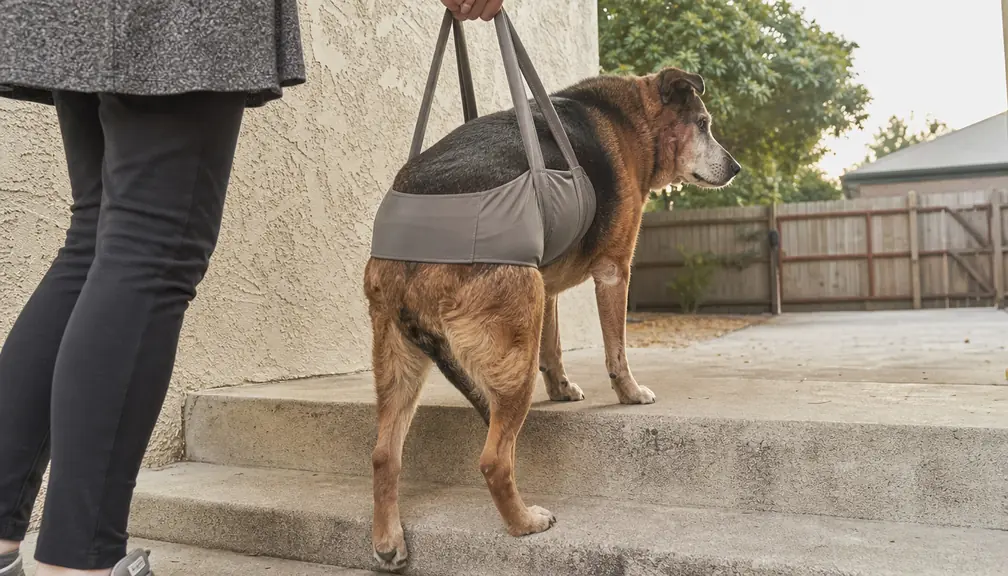
Murphy started hesitating at the two concrete steps off our back door in the fall of 2025. Not refusing. Hesitating. He would stand at the top, look down into the yard, take half a step back, then commit. In January his vet diagnosed arthritis in both hips. By April I had bought a LOOBANI dog lift harness in size X-Large, because a bath towel under his belly kept sliding out of my hands halfway down the second step. What follows is what seven months of using it has actually looked like.
I am not a veterinarian and I am not going to write like one. I taught high school PE and health for 31 years, and I read a product label the way I used to read a lesson plan, line by line, looking for what is genuinely there. Murphy is a 10 year old neutered male golden retriever mix, 71 pounds, and he is the only dog in this house. This is a plain account of the sling itself: what it does, what it will not do, and the two or three places it has annoyed me.
The Quick Verdict
Seven months on, the LOOBANI sling is the piece of equipment I reach for most. It lifts, it washes, and it folds into a bag. It will not fix a joint, and the fit takes about a week to learn.
Amazon Check Today's Price →If your dog balks at the back steps, start here
The LOOBANI lift harness is a rear end sling, not a full body harness. If I were starting over with Murphy, it is the first piece of equipment I would buy. Check the size chart on Amazon before you order.
Amazon Check Today's Price on Amazon →How I've Used It
The sling hangs on a hook by the back door, next to the leash. On a stiff morning I work it under Murphy's hips, take a handle in each hand, and walk down beside him while he takes the two steps at his own pace. Once we are on the grass I slide it off and let him wander. It goes back on for the climb up. On a good morning it stays on the hook and he does the steps alone, which is the outcome I actually want. That is two or three days a week now, down from six in April.
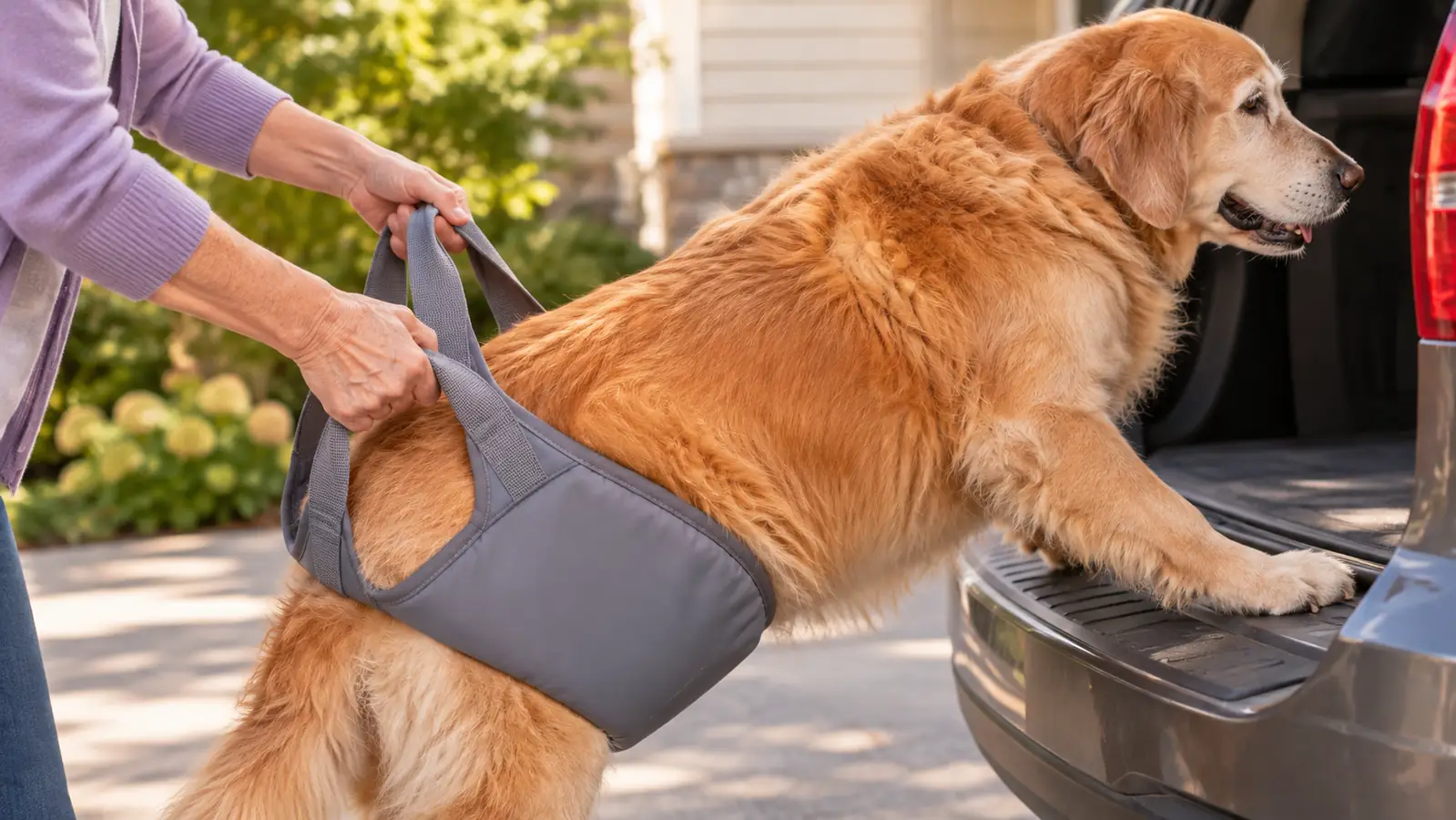
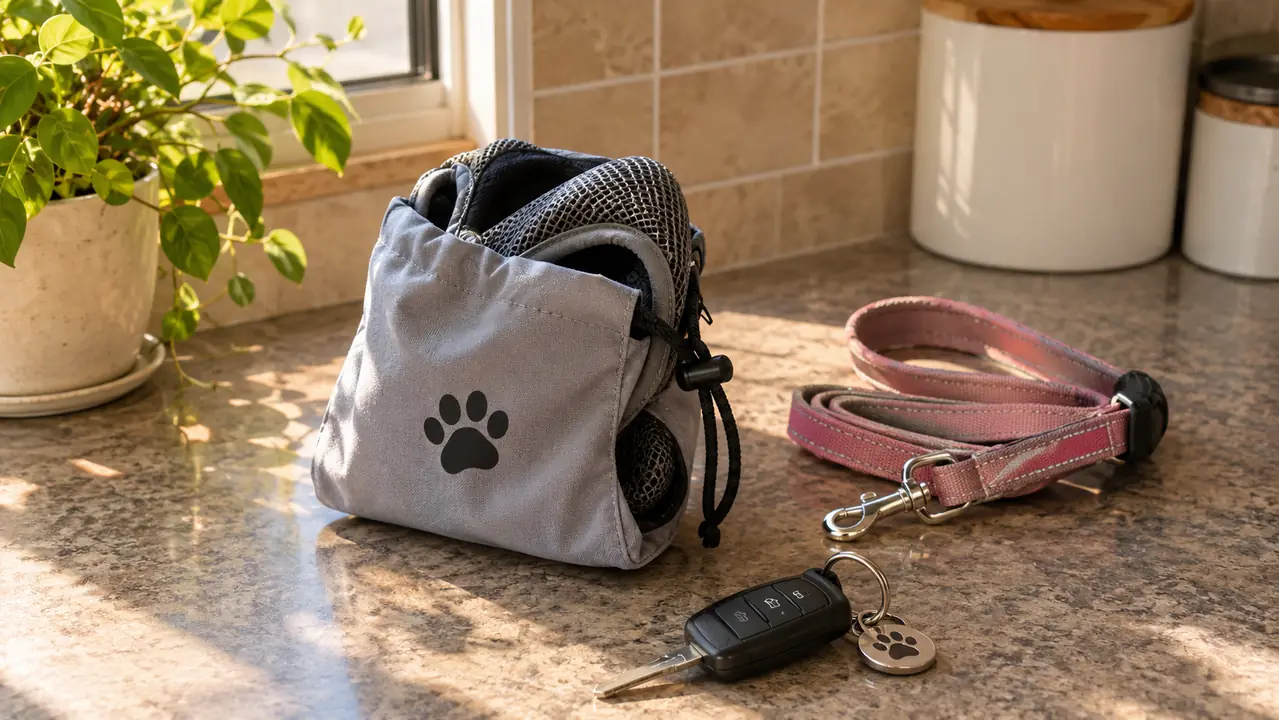
Vet days are the other standing appointment. The RAV4 sits in the driveway and the load floor is a good eight inches higher than those concrete steps. I keep the sling folded in its storage bag in the well behind the passenger seat. At the clinic I unfold it, take the handles, and let him put his front paws up first while I take the weight at his back end. That is the whole method and it has not changed in seven months.
It is not on him for walks. It is not on him around the house. It is not something he wears. It is a tool I pick up, use for ninety seconds, and put down, which is a large part of why it has held up. The soft lining has not matted, the nylon has not frayed at the seams, and the drawstring still holds the panel where I set it. I machine wash the sling about every two weeks and it comes out of the dryer ready to hang back on the hook.
Before April I used a bath towel folded into a band about four inches wide under his belly. It worked for two weeks and then it did not. The towel slid forward as he moved, my grip moved with it, and one morning on the second step I was holding more towel than dog. A sling with handles and a panel that stays where you put it is a different job entirely. That comparison, more than anything in the listing, is why I kept using it.
What the LOOBANI Sling Actually Does
Here is the part people get wrong when they order one. This is a rear end sling. The padded panel sits under the dog's hips, the two handles come up to your hands, and that is the entire device. It is not a full body harness, it never goes across his chest, and it does not take any weight off his front legs. If your dog's weakness is in the shoulders or the front end, this is the wrong piece of equipment and no amount of adjustment will change that.
The details that matter on the listing: nylon shell, a soft sheepskin-like lining against the dog, a drawstring closure that sets how the panel sits, and a stated weight of 14.88 ounces. It ships with the sling and a storage bag, and it is machine washable. Size X-Large is what I ordered for a 71 pound dog with a deep chest and a broad rear, and it has room left. The thickening in the panel is real. Against a bony old hip, padding is not a luxury.
What it will not do is treat anything. It is a lifting aid, full stop. It does not support a joint, it does not reduce inflammation, and it does not slow arthritis down. When I use it, I am doing the work his hips cannot do for about ninety seconds at a time. That is the honest description of the product, and I would rather you hear it from me now than find out on the third morning.
The Two Back Steps and the RAV4
Our back door has two concrete steps down to a fenced yard. Murphy came home as a puppy in spring 2016 and went up and down those steps several times a day for nine years without thinking about them. Since January the descent is the hard part. He wants to go down fast, the way he always has, and his back end does not keep up with his intent. The sling lets me walk beside him and hold him to a slow, even pace, one step at a time, without wrestling him.
The RAV4 is the bigger job. A dog who cannot push off with his hind legs is being asked to do something close to a broad jump onto that load floor. I take a handle in each hand, let him put his front paws up on the bumper first, and then lift at the hips while he walks his back legs in. Two years ago I would have boosted him with an arm around the belly. I cannot do that safely anymore and neither should you.
Fit, Size, and the First Week
I measured him before ordering, which sounds obvious and apparently is not. Rear width at the widest point, and the distance from the front of the hip to the base of the tail. The size chart put him in X-Large with room to spare. If your dog lands between sizes, take the larger one. A panel that is too narrow rides up into the soft part of the belly, and a panel that is too wide will slip off one hip the moment the dog turns.
The first week was clumsy on my end, not his. There is a rhythm to holding two handles at a steady height while a dog moves, and I did not have it. I pulled up when I should have pulled back, and twice I lifted before he had his front paws planted. He tolerated all of it, which tells you something about the dog and nothing about me. By the second week I could have the sling under him and be lifting in under ten seconds.
What Changed Over Seven Months
In April we used it six mornings out of seven. By October it was two or three. Same dog, same steps, same sling. Some of that is the sling doing its job. A dog who is not scrambling and frightened on the steps moves better on the steps. Some of it is the season, his weight, and the plain fact that a ten year old dog has good weeks and bad weeks. I cannot separate those things and I am not going to pretend I can.
The rest of the picture matters too, because the sling is one piece of it. Murphy takes a daily joint chew with breakfast, a fish oil soft gel tucked into the same bowl, and an afternoon chew after his walk. Our vet approved each one before I added it. Because three of them overlap, I have no way to prove which did what, and anyone who tells you they can is guessing. The supplements are aimed at his joints. The sling is aimed at the two steps and the back of my car. Those are different jobs and one does not replace the other.
Where It Falls Short
It is a two handed tool. Both handles, both hands, no coffee cup, and no leash unless you loop it over your wrist. On a wet morning with a dog who is eager to reach the grass, that matters. I have learned to put him on a short lead and take the steps slowly, which is not how either of us would choose to start the day.
The fit takes attention. The drawstring holds the panel where you set it, but it will not correct itself while the dog is moving, and a sling that has shifted off center is worse than no sling because it puts uneven pressure on one hip. I check the position before every lift now, out of habit. A person in a hurry will skip that check, and the dog will feel it.
And it does nothing for the front half of the dog. If Murphy's shoulders go the way his hips went, I will be back to reading labels for something else. This is a rear end device for a rear end problem. An owner who needs full body support should be looking at a different category of equipment entirely. I have read about those and never owned one, so I will not pretend to advise you on them.
What I Liked
- Lifts the rear end with two handles, which is exactly the job the back steps and the RAV4 require
- The padded, sheepskin-like lining has held up through seven months and roughly fourteen machine washes
- The drawstring closure keeps the panel where you set it, once you learn to check it
- Folds into the included storage bag and lives in the car without taking up space
- Nylon shell has not frayed at the seams, and the whole sling weighs about 15 ounces
Where It Falls Short
- Rear end support only. It does nothing for the chest or the front legs
- Two hands required, so a leash and a cup of coffee are both out
- Fit is not self correcting. A shifted panel puts uneven pressure on one hip
- There is a learning curve of about a week before the lifting rhythm feels natural
- It is not a joint product. It will not change the arthritis and was never meant to
In April we used it six mornings out of seven. By October it was two or three. Same dog, same steps, same sling.
Who This Is For
This is for the owner of a large dog whose back end is the problem. Weak hind legs, a dog who has started hesitating at stairs or at the car door, a dog recovering from a rear leg injury under a vet's direction, or a dog with diagnosed hips who still wants to get up and go outside. It is also for the owner who has already tried a towel and found out what a towel does, which is slide.
It suits a household with a little patience. At 71 pounds, Murphy is at the low end of what I would call a large dog, and the X-Large has room in it. A heavier dog will want the same size and a firmer hand on the handles. If your dog is small, honestly, pick him up. This is a tool built for the weight you cannot lift anymore.
Who Should Skip It
Skip it if the weakness is in the front end, if your dog needs full body support, or if your vet has already told you to use a specific piece of equipment and this is not it. Skip it if you want something the dog wears all day, because this is not that. And skip it if you are hoping it will help the joints themselves. A sling is a lifting aid and a supplement is a supplement, and neither one is the other.
Also skip it if you are not going to check the fit each time. A sling set unevenly on a dog with two bad hips is a way to make a sore dog sorer. That is not the product's fault, but it is the honest reason some people should not buy it. Talk to your own vet about what your dog actually needs. I am a retired teacher with one dog and seven months of notes, and that is the whole of my authority.
The steps are not going to get shorter. This makes them possible again.
Seven months, one dog, two concrete steps, and a lot of slow mornings. If that sounds like your house, the LOOBANI lift harness is worth a look. Read the size chart before you order, and check the panel position before every lift.
Amazon Check Today's Price on Amazon →